
Go-anzen-ni: Learning from Japan to Future-Proof Indo-Pacific Ports
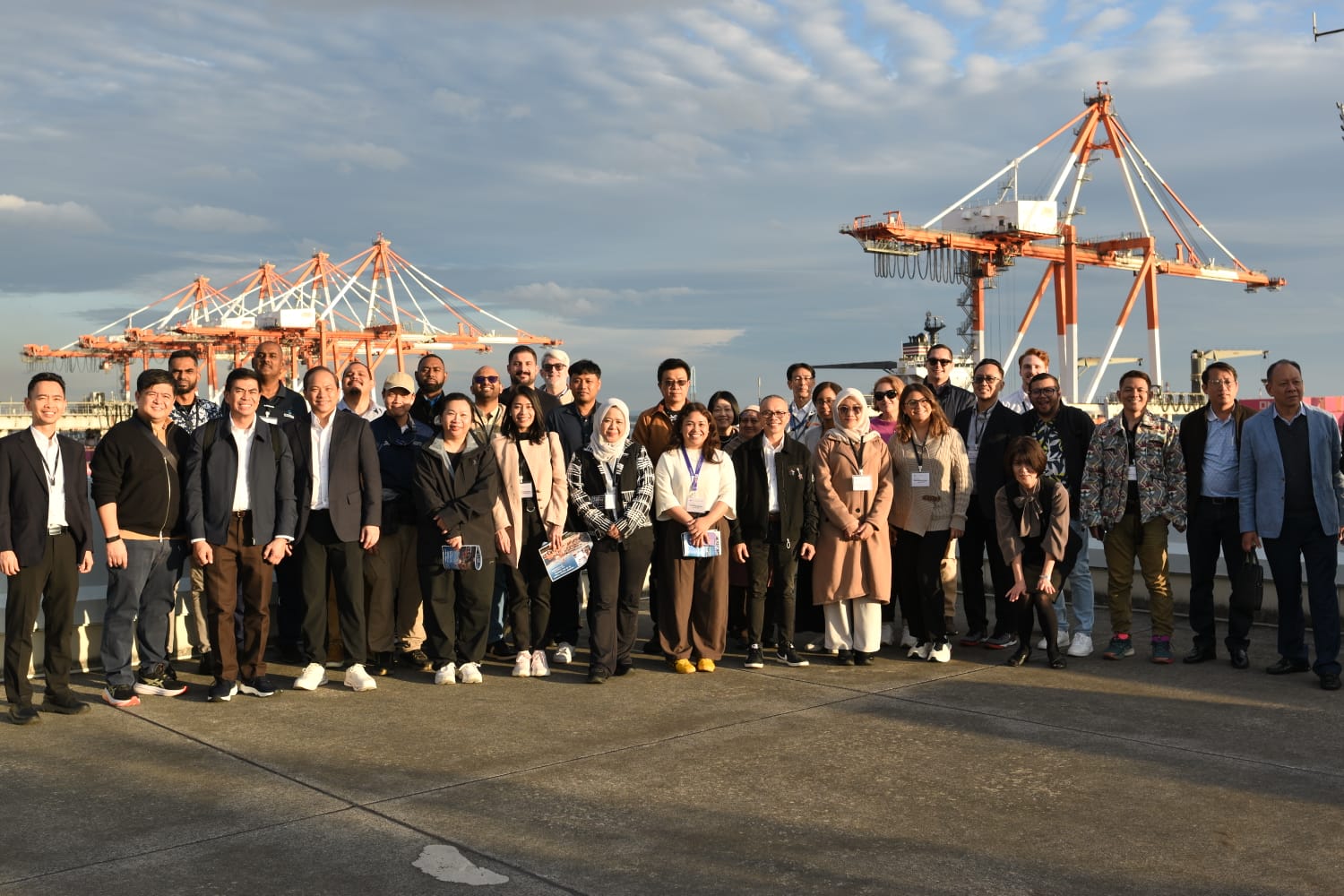
At Meiko Trans’s logistics facility in Nagoya, participants learned a Japanese greeting: “go-anzen-ni,” a wish for a safe, accident-free day. It was a fitting reminder during a week spent examining how ports can prepare for disruption while keeping trade moving.
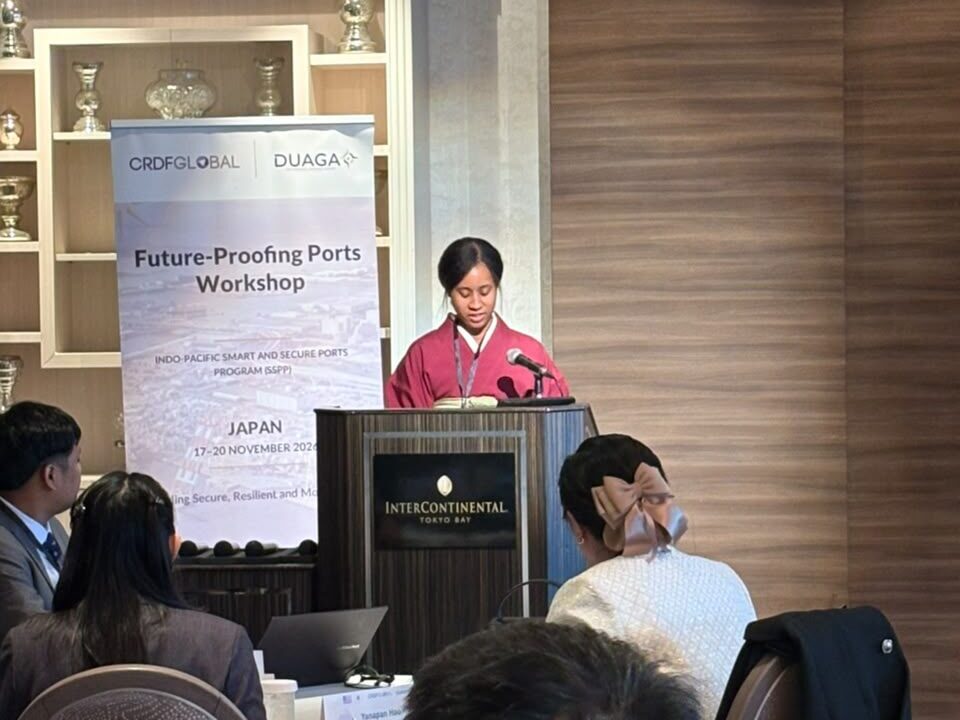
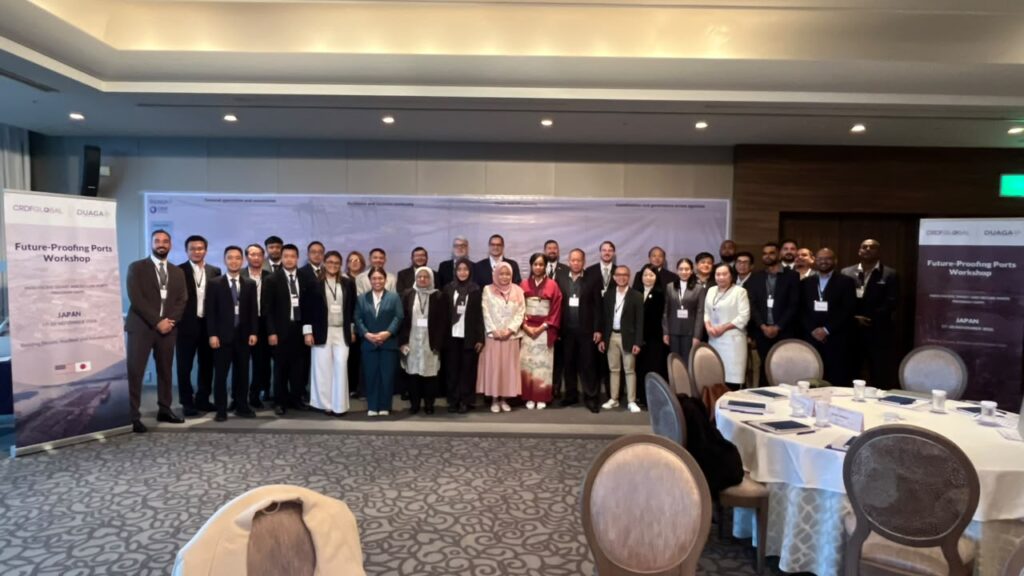
Held in Tokyo and Nagoya from November 17–20, 2026, the Future-Proofing Ports Workshop convened delegations from Fiji, Indonesia, the Philippines, Thailand, and Vietnam, with additional participation from the Sri Lanka Ports Authority and IOS Partners through the Ports of the Future Program. The workshop was delivered under the Indo-Pacific Smart and Secure Ports Program (SSPP), supported by the U.S. Department of State’s Bureau of East Asian and Pacific Affairs (EAP) and implemented by CRDF Global, with technical support from DUAGA LLC and coordination with the U.S. Embassy in Tokyo and U.S. Consulate in Nagoya.
“Economic security and national security go hand in hand. Strong and reliable ports are essential to both of those,” said Christopher Elms, Economic Counselor at the U.S. Embassy in Tokyo, in his opening remarks. He emphasized ports’ role as lifelines during disasters and the opportunity to learn from Japan’s experience. SSPP Program Manager Taelor Logan welcomed participants with an emphasis on practical learning, trusted technologies, and regional exchange.
Learning from Japanese port operations
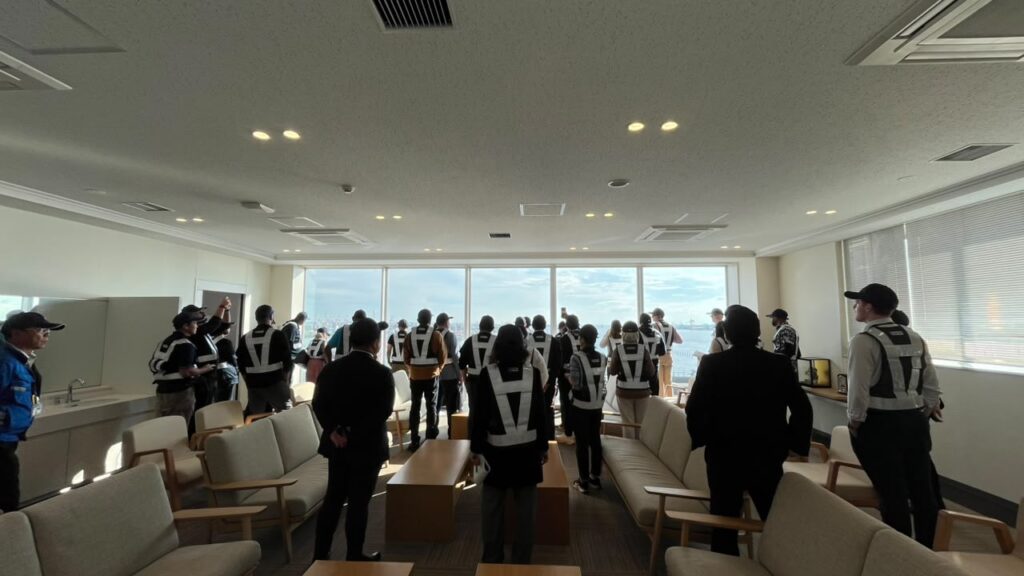
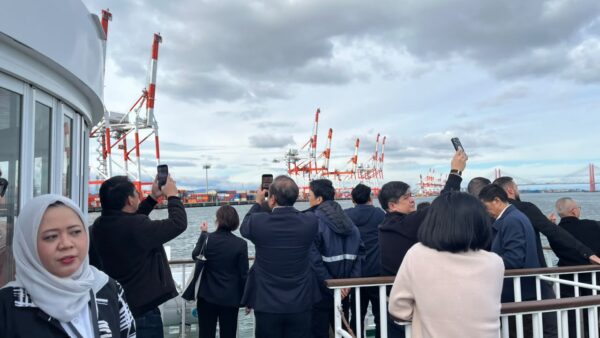
A technical field mission to the Port of Nagoya connected these discussions with everyday operations. The Nagoya Port Authority shared its approach to disaster preparedness and business continuity, including recovery targets of three days for relief goods and seven days for fuel supply routes and container cargo. These targets depend on coordinated action by public agencies, terminal operators, utilities, and transport providers.
At Meiko Trans Co., Ltd., participants saw how targeted automation could improve cargo handling alongside measures to protect people and maintain operations. The company reported reducing container loading time from 20 to 12 minutes through changes to its loading process. The visit to Tobishima Container Berth Co., Ltd. (TCB) demonstrated how terminal automation can be introduced in stages, with staff continuing to supervise operations and manage the interaction between automated equipment and external trucks.
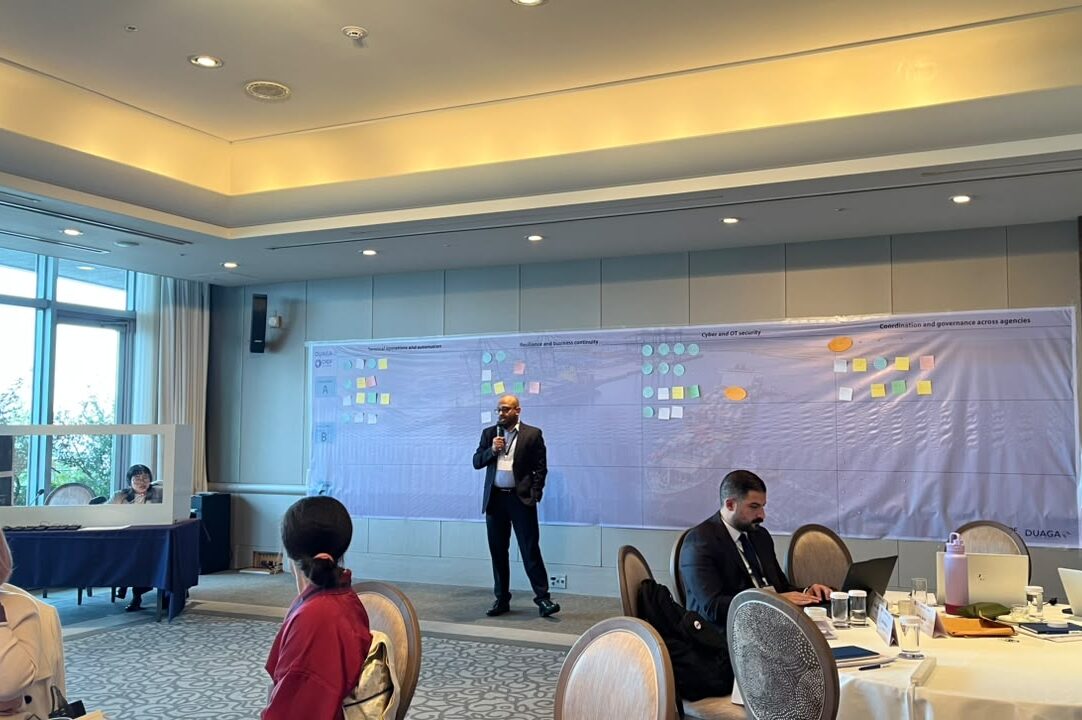
Back in Tokyo, Japan’s Ministry of Land, Infrastructure, Transport and Tourism (MLIT) expanded on the national framework behind port resilience. Its presentation on collaborative protection examined how public and private stakeholders can coordinate protective infrastructure, evacuation arrangements, and business continuity across a shared waterfront. For participants, the discussion connected investment decisions with the responsibilities of the institutions that must work together during a disruption.
Connecting modernization with trusted technology
Discussions on cyber resilience and secure procurement carried the field observations into technology decisions. Drawing on Nagoya’s experience with a disruption to its shared terminal system, participants examined how ports can maintain essential functions when digital services become unavailable, including who authorizes fallback procedures and how operations resume safely.
The trusted technology and secure procurement session featured AllRead, Indra, Moffatt & Nichol, and Prodevelop. Presentations covered camera-based gate automation, port community platforms, terminal simulation and digital twins, and tools for coordinating truck appointments and vessel calls. The exchange encouraged participants to consider how potential solutions would work with existing systems, who would control operational data, and what long-term support and recovery arrangements suppliers would provide.
Taking the learning home
The final day put coordination to the test through a fictional port disruption exercise. Faced with conflicting cargo information and an interruption to a shared digital service, participants worked through decisions on cargo release, continued operations, and communication among agencies. The exercise made the discussion concrete: reliable information must reach the institution authorized to act, and each partner needs to know what happens next.
The workshop concluded with five written country application plans identifying priorities, proposed responsible institutions, and initial timelines. These included joint continuity exercises, coordination arrangements, and phased digital improvements for participants to take forward within their organizations. The plans provide a basis for follow-up through SSPP, including country-specific engagement under the Supply Chain Resilience Project (SCRP), subject to counterpart priorities and institutional approval.
“The challenges facing ports today do not stop at national boundaries, and neither should our efforts to address them,” Logan said in her closing remarks. “Stronger resilience depends on strong partnership among governments, port operators, customs authorities, maritime agencies and private sector stakeholders.”
The exchanges were made possible by the U.S. Embassy in Tokyo and U.S. Consulate in Nagoya, the expertise and facilitation of DUAGA’s subject matter experts, and the contributions of MLIT, the Nagoya Port Authority, Meiko Trans, TCB, and the participating technology providers. Observers from the Sri Lanka Ports Authority and IOS Partners also connected the discussions with the sister Ports of the Future program.
Logan’s closing encouragement brought the week back to the work ahead: “Continue the conversations with one another, test new approaches, and look for opportunities to strengthen resilience and preparedness within your own ports.”