
CRDF Global Organizes Tour of American Nuclear Industry, Educational Institutions for Representatives of Philippine Congress
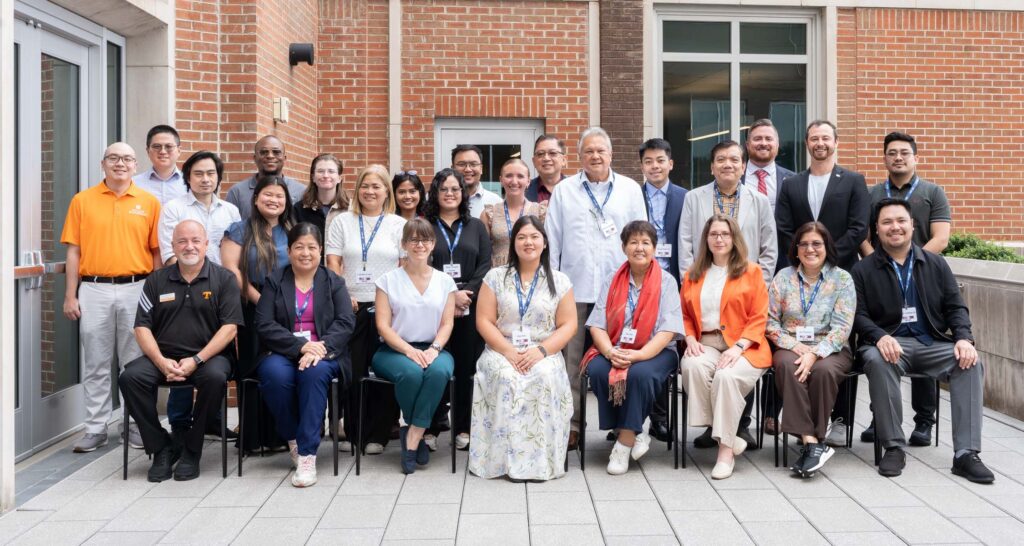
CRDF Global was proud to organize an impactful visit by members of the Congress of the Philippines with representatives of American nuclear industry, U.S. government agencies, and leading U.S. educational institutions, under the United States Department of State Foundational Infrastructure for the Responsible Use of Small Modular Reactor (SMR) Technology (FIRST) program, as described in the article below, which originally appeared on the University of Tennessee – Knoxville website.
UT Hosts Philippines Representatives to Share Nuclear Expertise
July 2, 2026, by Rhiannon Potkey.
The University of Tennessee’s Department of Nuclear Engineering has welcomed government officials and professors from the Philippines to campus this summer to provide guidance on nuclear engineering education and policy.
On June 29, UT hosted a 12-member delegation visit from the Philippines comprised of congressional and legislative figures working on civil nuclear issues in the country. The visit consisted of discussions, presentations, lab tours in the Zeanah Engineering Complex, and a shared meal.
The visit was arranged by CRDF Global, an independent nonprofit organization that promotes safety, security, and sustainability through science and innovation, as part of the United States Department of State Foundational Infrastructure for the Responsible Use of Small Modular Reactor (SMR) Technology (FIRST) program, which provides technical assistance to nuclear energy newcomer countries to deploy SMRs and other advanced reactor technology with the highest nuclear security, safety, and nonproliferation standards.
“The visit from the Philippines delegation highlighted many opportunities for the department to collaborate with key stakeholders on the development of their nuclear industry,” said NE Associate Department Head and Southern Company Faculty Fellow Jamie Coble. “Through these initial conversations, we identified several potential pathways to support their nuclear education and training, many of which dovetail nicely with ongoing efforts across the department. We were impressed with the enthusiasm they all showed for nuclear energy, and we look forward to continued conversations about how we can best support their burgeoning nuclear workforce.”
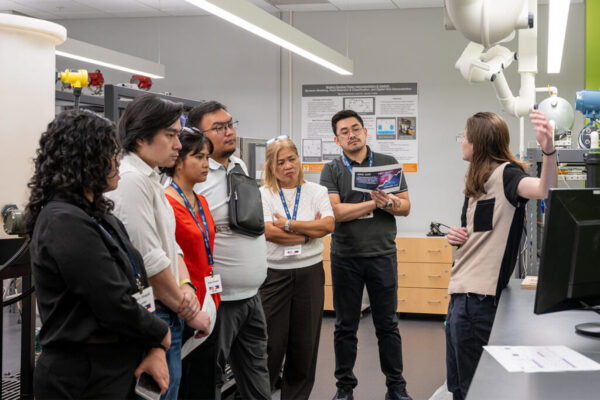
Photos by Ashlyn Kittrell
Building an Educational ‘Pipeline’
UT and the Philippines Department of Science and Technology signed a memorandum of understanding in 2025 to collaborate on nuclear education programs that can be implemented in universities across the Philippines.
As part of that agreement, NE Assistant Professor Xingang Zhao is hosting a visiting scientist from the Philippines this summer. Jon Dewitt Dalisay, a mechanical engineering professor at the University of the Philippines Diliman, is spending three months at UT for research collaboration and professional development. He is the first visiting professor between the countries since the MOU was signed.
“It was perfect timing because our College of Engineering at my university is planning to develop a nuclear engineering graduate program,” Dalisay said. “The college is looking to have professors get some nuclear engineering proficiency by way of these kinds of visits and scholarships.”
Dalisay has been involved with two of Zhao’s ongoing research projects related to nuclear system thermal hydraulics and nuclear digital twins. He has also been studying Zhao’s course materials to bring the information back to his university to help institute the nuclear program.
“We’re benefiting from his expertise as a professor and the visibility this provides UT on a worldwide stage,” Zhao said. “It’s great to have international collaborations like this and helping a country be interested in developing nuclear—both in education and nuclear power. That’s exciting.”
After Dalisay returns to the Philippines, one of his students will be visiting UT for six months to study nuclear engineering. Zhao has already been invited to join the student’s master’s committee to help ease the transition. In the future, UT professors and students are expected to visit universities in the Philippines.
“We want to build a pipeline. I don’t want this to be a one-time thing,” Zhao said. “Hopefully, there will be more scholars that will join us in different disciplines. There are a lot of other nuclear science and engineering faculty and researchers in our department who can be great international collaborators.”
